Ruthless Take / Art & Technology
Can a Machine Produce Art?
Photography didn’t destroy painting. It helped change what painting could become. What might AI do for human creativity?
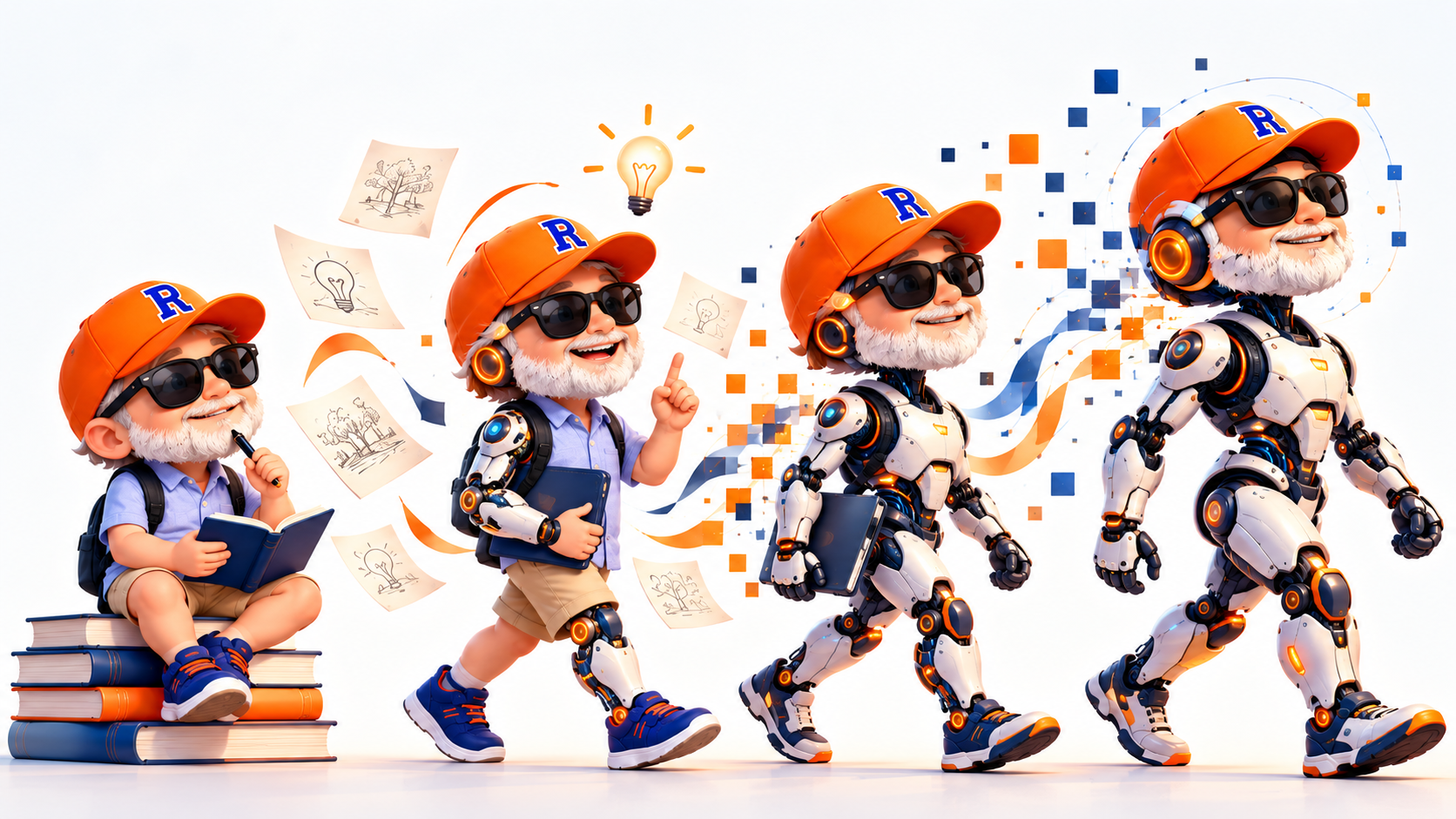
When photography first appeared in the nineteenth century, it raised an uncomfortable question: Could a machine produce art? In 1859, the French poet Charles Baudelaire attacked photography as a threat to the artistic imagination. Photography had a legitimate place serving art and science, he thought, but he also feared what would happen if cameras were confused with artistic creation.
Painters would spend years mastering perspective, anatomy, light, and shadow to capture the world they saw around them. Then a machine arrived that could reproduce this visible world without anyone having to paint or draw.
Looking back, though, I think we’ve been concentrating on the least interesting part of that story. The important question wasn’t whether the camera would replace the artist. It was what effect this new technology had on painting itself. Photography didn’t destroy painting. It helped change what painting could become. And I wonder whether we’re about to witness something similar happen because of artificial intelligence.
What Photography Really Changed
Photography presented painters with a choice. They could defend the importance of reproducing the world by hand, or ask a different question: If a machine can capture what the world looks like, what else can painting do?
Photography wasn’t solely responsible for the seismic changes that followed in the art world. Painting was already changing, and artistic movements rarely have a single cause. But photography contributed to a reevaluation of what representation meant. The Impressionists explored light, color, and perception. Expressionists distorted appearances to communicate emotion. Cubists challenged conventional perspective. Surrealists created worlds where everyday objects appeared in impossible situations, trying to challenge our understanding of reality.
Surrealism emerged from a much broader intellectual and artistic movement. There were new ideas about dreams and the unconscious. But something especially interesting happened: Surrealist artists began using photography itself. Man Ray manipulated darkroom techniques to create abstract, dreamlike images. His rayographs were produced without a camera by arranging objects directly on light-sensitive paper and exposing them to light.
A technology that was used to reproduce reality mechanically was now being applied to create images that didn’t resemble reality at all. It became a tool for an artist’s imagination. Photography didn’t cause Surrealism, and it didn’t make traditional painting obsolete. It helped expand the relationship between a technical depiction and an artistic expression.
A new tool’s contribution isn’t always that it performs an existing task more efficiently. Sometimes it inspires how and what people decide to create. We tend to judge new technologies by what they replace before we understand what they might make possible. That’s where the comparison with AI becomes interesting.
The debate over whether AI can write a novel, make a movie, or compose music worth listening to is reasonable. But we’re making the same mistake we made with photography: focusing on whether a machine can do what an artist already does. I’m more interested in what people might create with its help.
What becomes possible when the skill required to express an idea is no longer the main obstacle to expressing it? Someone with a vivid imagination but no drawing ability, or someone who struggles with words, might finally bring their ideas to life. Even experienced artists might find themselves free to experiment in ways they couldn’t before.
This doesn’t guarantee good art. But it opens doors that were previously closed, and that’s what interests me. Not whether AI can imitate what we’ve already created, but what people might create now that they couldn’t create before.
When We Confuse the Method With the Value
We have a natural tendency to associate effort with value. We admire the musician who practices for decades, the painter who spends months completing a portrait, and the writer who labors over every sentence. And we should. Those accomplishments represent patience, dedication, and mastery. Sometimes the process itself contributes to our appreciation. Watching someone perform a difficult piece of music is a different experience from listening to a recording. A handmade object may matter partly because someone made it by hand.
But the effort required to produce something isn’t necessarily the measure of its worth. Consider two thoughtful essays. One was written entirely by a human being; the other emerged from someone’s original ideas through extensive collaboration with AI. Both present compelling arguments, offer an interesting perspective, and leave the reader thinking differently. Why should the second automatically be considered inferior? It shouldn’t automatically be considered superior either. Both have to stand on their merits.
There’s also something important about the skills people have already developed. A painter’s understanding of light, color, and composition didn’t disappear when photography arrived. A musician’s understanding of harmony, rhythm, and expression doesn’t become worthless because technology makes it easier to produce music. Experience can make someone better equipped to use a new tool, not less, and that tool may let them create something their existing technical abilities wouldn’t have permitted.
We become attached to the methods through which we’ve learned to create value. Those methods can become part of our identity, particularly when we’ve spent years developing them. When technology changes the process, it can feel as though something valuable is being taken away. Sometimes it is: skills can become less economically valuable, and that has real consequences. But we should distinguish the value of an established skill from the limitations that made the skill necessary.
Sometimes we mistake protecting the method for protecting the value itself. And that tendency reaches far beyond art.
The Funnel Never Disappeared
People have always created things. Long before YouTube, TikTok, or Substack, people wrote stories, made music, painted pictures, and developed ideas they wanted to share. Most of that work never reached an audience, but the creativity was always there. Publishers decided which books were printed. Record labels controlled music distribution. Television networks determined whose work appeared on the screen. The gatekeepers controlled much of the funnel through which creative work reached an audience.
The internet changed the process. YouTube provided distribution for video without a television network. Substack allowed writers to publish without needing a publisher to accept their work. Much of this work has been forgotten. Some was terrible, some was wonderful, and a small amount found an audience. New creators emerged who might never have made it past the old gatekeepers.
The funnel didn’t disappear. Only the way work entered it changed. There are still gatekeepers: platforms, algorithms, popularity, marketing, and the limited attention of audiences all influence what gets discovered. The system isn’t fair. Popularity is no guarantee of quality, and excellent work can go unnoticed. But the fundamental process remains the same. People create, and their work reaches an audience, or it doesn’t. Some of that work will resonate. Most will disappear.
AI is widening the funnel again, but this time it isn’t just changing distribution. It’s changing production. The gap between having an idea and having the skills to bring it to life is shrinking. People who previously lacked the technical abilities, time, or financial resources to express certain ideas can now attempt to create them. We’ll get more mediocre work, more imitation, and more things nobody remembers. And potentially more extraordinary work that otherwise would never have existed.
There is a real complication. When producing content becomes nearly effortless, the amount available can grow much faster than our ability to consume it. Attention becomes even scarcer. Discovery becomes harder. Platforms deciding what we see can become increasingly powerful. Those are genuine problems, but they’re problems of discovery and evaluation, not evidence that creativity itself needs to be restricted.
We don’t need to declare everything good or pretend audiences always recognize the best work. We don’t need to eliminate legitimate safeguards against deception or infringement. Using AI to help create something doesn’t automatically make the result inferior. The work still has to stand on its merits. We cannot know everything worth discovering before we’ve given people the opportunity to create it.
Does the Maker Matter?
Another change AI brings is access to something that was previously difficult or expensive to obtain: a good editor. Editors have always helped writers generate ideas, question assumptions, compare alternatives, improve arguments, and decide which version of something works best. A skilled editor doesn’t only fix grammar. They can recognize weaknesses the writer has missed or suggest an entirely different way to communicate an idea.
None of those functions are new. What’s new is that many people can now obtain some of that assistance almost instantly and at a fraction of the previous cost. A tireless AI system capable of producing endless variations isn’t identical to a human editor. It can introduce errors, reinforce bad assumptions, and confidently recommend something that makes the work worse. But it also makes a form of editorial collaboration accessible to people who might never have had it before.
The fact that AI can exercise editorial judgment doesn’t mean it replaces the writer’s judgment. An editor can tell a writer an argument is strong; the writer still has to decide whether it expresses what they believe. AI can suggest ten endings for an essay; the creator can accept one, reject them all, or take the work in another direction. Then the audience makes its own judgment. A machine can tell me a painting is moving. It can’t decide whether that painting moves me.
That’s true of human critics and editors as well. Their opinions can influence my experience, but they can’t experience the work for me. AI can participate in both the creation and evaluation of work without eliminating the distinction between the creator’s intention and the audience’s response. This doesn’t settle every question about authorship. An editor can contribute substantially to a finished work, and AI can contribute more than ordinary editorial suggestions. But receiving assistance doesn’t automatically invalidate the creative decisions made by the person using AI or an editor.
There’s a serious objection worth considering. Some people would argue that art isn’t simply a finished object to be judged. It’s one human being communicating something to another. A painting matters partly because a person chose to make those marks. A song can move us because another human being experienced the emotions being expressed. A novel can matter because someone struggled to understand an aspect of life and found a way to communicate it. Who created something, and why, can be part of its meaning.
That’s a legitimate argument. But it doesn’t follow that every work involving AI lacks human intention or expression. A person can bring an idea, an experience, a question, or a particular vision to the process. They can decide what belongs, what should change, and what the finished work should communicate. AI may play a substantial role in executing that vision, and sometimes the machine may contribute ideas the person never anticipated. How much credit belongs to the person and how much to the technology can be difficult to determine. That deserves consideration, but not an automatic verdict.
There are different ways people experience art. Sometimes knowing the creator’s story changes everything. Other times we encounter a work knowing almost nothing about who made it, and it still moves us. The human connection matters, but its importance doesn’t establish that every particular production method is necessary for meaningful expression. Nor does it establish that every work created with AI deserves to be called art. Those are judgments we still have to make.
There are also legitimate questions about copyright, ownership, training data, consent, and compensation. These involve rights and responsibilities, not simply resistance to change. They deserve serious attention. But addressing those concerns doesn’t require us to conclude that older methods of creation are inherently more valuable. We can protect legitimate rights and demand accountability without deciding in advance that new creative tools have no place.
Nor should we confuse the practical rules institutions adopt to manage an enormous volume of material with a universal judgment about artistic worth. A rule may solve a useful problem. That doesn’t mean it answers every question. The goal should be to protect what actually matters, not merely preserve the way things used to be done.
What Comes Next?
I keep returning to that painter confronting photography. Imagine watching a machine accomplish something that once required years of painstaking work. You could devote your energy to defending the skill you’ve mastered, or begin exploring what becomes possible now that the old constraint has changed. You might choose both. Traditional craftsmanship doesn’t stop being valuable because a new tool exists. But the willingness to explore matters.
When photography appeared, people could imagine faster portraits. They couldn’t necessarily foresee everything photography would become or the new directions art would take as the technology developed. We may be in a similar position today. We talk about AI writing essays, making images, and composing music because those are the forms of expression we already recognize. But what about the things we haven’t thought to create?
The most interesting consequences of AI may not fit neatly into existing categories. And the people who discover them may be people who never had access to the tools, training, or institutions that once determined who could create. That’s why I don’t want to judge the future entirely by the standards of the past. That doesn’t mean everything new is better. Some things are worth protecting. Others are just limitations we’ve gotten used to living with. We should recognize the difference.
That’s what Ruthless means to me: questioning assumptions, even the ones we’ve spent years learning to believe; being willing to change our minds when the world changes; and recognizing when an old rule has stopped helping us think.
So can a machine produce art? Machines can help produce art. Whether a machine can be an artist in the same sense as a human being is a different question. But it’s no longer the question I find the most interesting. I want to see what human beings might create now that AI has changed what’s possible.
— Ruthless.
AI tools assisted with research and editing. The ideas, arguments, and final editorial decisions are mine.
See how I analyze stocks.
Read the latest analysis →